Data-Driven Culture: How BI Empowers Teams Across Organizations
What's Business Intelligence, and exactly why is it essential?
Business Intelligence (BI) identifies the various tools, strategies, and systems that agencies use to analyze knowledge and get actionable insights. With global knowledge generation growing greatly, businesses depend on BI to produce informed decisions quicker, find developments, and enhance processes. Integrating Business Intelligence in to daily procedures allows groups to spot inefficiencies, outlook market trends, and increase client experiences predicated on data-backed evidence.
Which industries gain the absolute most from BI adoption?
While BI is important across all areas, industries such as finance, retail, healthcare, and production have seen the greatest impact. Merchants, as an example, use BI dashboards to track stock turnover and customer conduct styles, although healthcare providers leverage analytics for patient result optimization and source allocation. Statistics indicate that businesses applying BI resources record a 127% higher likelihood of improving decision-making quality.
.png?width=958&name=IFBI%20Dashboard%20(3).png)
What are the most recent styles in Business Intelligence?
AI-Powered Analytics – Synthetic Intelligence and equipment learning are permitting predictive ideas, anomaly recognition, and automation in information analysis.
Self-Service BI – Non-technical staff are now able to entry dashboards and generate reports without relying seriously on IT teams.
Real-Time Knowledge Monitoring – Contemporary BI tools allow live monitoring of KPIs, ensuring immediate insights for appropriate decisions.
Portable BI – Accessing dashboards via mobile devices guarantees executives and field staff stay educated on the go.
How do companies measure the ROI of BI?
Measuring ROI involves studying changes in effectiveness, sales development, and charge reduction. As an example, a retail business might visit a 20% lowering of stockouts after utilizing BI instruments, while a logistics company may possibly reduce distribution setbacks by 15% through predictive analytics. Typical KPI checking and performance dashboards are key to quantifying these benefits.
What problems do companies experience in BI use?
Common limitations contain knowledge silos, bad data quality, and opposition to change. Overcoming these problems involves proper governance guidelines, clear data methods, and government help to foster a data-driven culture.
How are dashboards surrounding decision-making today?
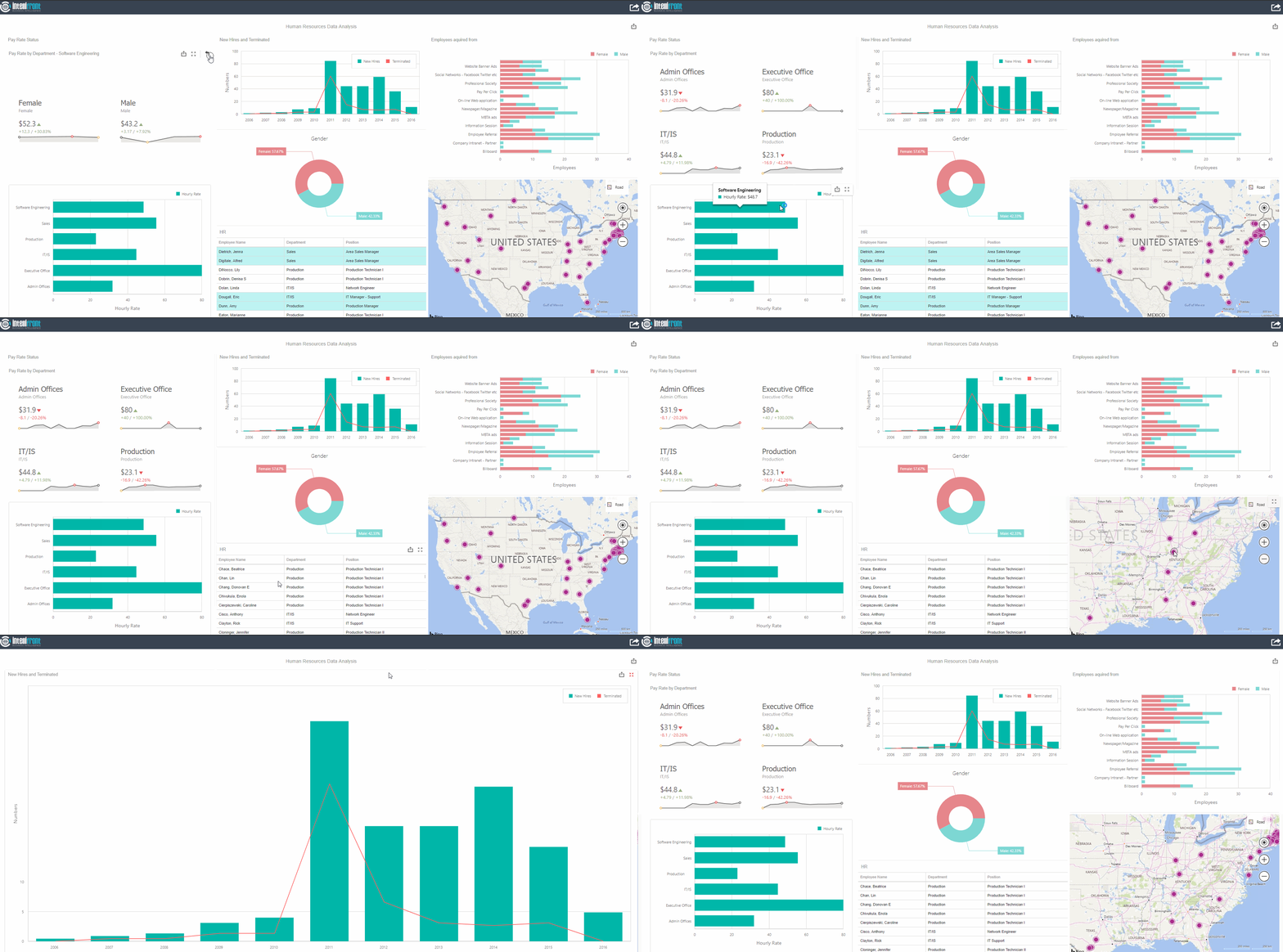
BI dashboards offer a visual snapshot of critical metrics, which makes it easier to spot styles and anomalies quickly. Professionals can examine historic data, monitor performance against targets, and make evidence-based conclusions in actual time. In accordance with business research, businesses using interactive dashboards experience a thirty days faster answer rate to critical Business issues.
What functions should modern BI application contain?
Successful BI programs present spontaneous dashboards, automatic revealing, predictive analytics, real-time alerts, and integration with present enterprise systems. Safety and scalability may also be important to make sure sensitive and painful information is protected while promoting organizational growth.
How is information governance associated with BI accomplishment?
Appropriate information governance guarantees precision, uniformity, and compliance, which are essential for BI effectiveness. Without obvious governance, reports and ideas can be unreliable, resulting in bad decision-making.
Can AI replace human analysts in BI?
AI increases analytics but doesn't replace individual insight. Analysts interpret data, give situation, and arrange ideas with Business strategy. The mix of AI-driven analytics and specialist judgment creates the most impactful results.
How do organizations remain forward with BI in 2026?
Businesses must spend money on scalable BI systems, teach team in information literacy, and constantly evaluate KPIs aligned with proper objectives. Adopting emerging systems like AI, natural language control, and predictive modeling ensures organizations remain agile and aggressive in the data-driven landscape.

Comments
Post a Comment